Eviction Process in Maryland: Timeline, Notices, and What to Expect

Streamline Property Management

Key Takeaways
- Following Maryland's court-supervised eviction process helps landlords recover possession of their rental property while complying with state law.
- Using the correct notice and filing the appropriate court documents can help keep an eviction case moving forward.
- Only a sheriff or other authorized official can carry out an eviction after the court issues a Warrant of Restitution.
- Staying current with Maryland's eviction laws and local court procedures helps landlords make informed decisions throughout the process.
Evicting a tenant in Maryland requires landlords to follow a court-supervised legal process that is governed by state law. Whether the reason for the eviction is unpaid rent, a lease violation, or a tenant remaining in the property after the lease ends, landlords cannot simply ask a tenant to leave or remove them from the property on their own.
Instead, the process must move through Maryland's District Court before possession of the rental property can legally be returned to the owner. Because Maryland has specific notice requirements, filing procedures, court hearings, and enforcement rules, even small mistakes can delay an eviction or result in a case being dismissed.
Understanding how the process works can help landlords protect their investment while remaining compliant with state law. Although the general process is similar throughout Maryland, local court procedures and timelines may vary by county.
Legal Reasons for Eviction in Maryland
Maryland law recognizes several situations in which a landlord may seek possession of a rental property through the courts. One of the most common reasons is nonpayment of rent. When a tenant fails to pay rent according to the lease agreement, a landlord may begin the legal process after meeting the applicable notice requirements.

Another common reason is a breach of the lease agreement. Examples may include unauthorized occupants, unauthorized pets, repeated violations of lease terms, or other material breaches of the rental agreement. The notice required before filing depends on the circumstances and the type of violation.
Landlords may also file a holding over action when a tenant remains in the property after the lease has expired or after the tenancy has otherwise legally ended.
Certain other situations, including some forms of illegal activity or other legally recognized grounds, may also justify an eviction under Maryland law. Because the required procedures differ depending on the reason for the eviction, landlords should ensure they are following the correct process before filing with the court.
Need help understanding your property management options?
See What We Offer
Providing the Required Notice
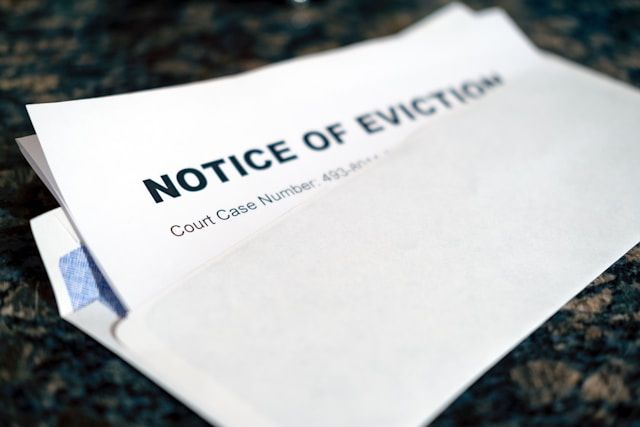
The first step in many eviction cases is providing the tenant with any notice required by Maryland law. For nonpayment of rent, landlords generally must provide the tenant with a written Notice of Intent to File a Complaint for Summary Ejectment before filing an eviction action. The notice must comply with Maryland's statutory requirements.
For breach of lease cases, the required notice depends on the nature of the lease violation and the applicable provisions of Maryland law. Certain violations may require different notice periods than others.
If a landlord wishes to end a month-to-month tenancy without cause, Maryland law generally requires at least 60 days' written notice before the tenancy ends, unless another law or lease provision applies.
For fixed-term leases, the tenancy typically ends on the date stated in the lease. Although a separate notice may not always be legally required, reviewing the lease agreement and providing written communication when appropriate can help reduce misunderstandings regarding move-out expectations.
Because notice requirements may change through legislative updates or local ordinances, landlords should verify they are using the correct notice before beginning the Maryland eviction procedure.
Filing an Eviction Case
If the tenant does not resolve the issue within the applicable notice period, the landlord may file the appropriate eviction action with the Maryland District Court. The filing must include the required court forms and any supporting documentation, such as the lease agreement, payment records, notices provided to the tenant, or other evidence supporting the landlord's claim.
Providing complete and organized documentation can help the court understand the facts of the case and reduce unnecessary delays during the legal process.
Tenant Defenses
Once an eviction case is filed, tenants have the opportunity to appear in court and present legal defenses. Depending on the circumstances, a tenant may argue that rent has already been paid, that the amount claimed is inaccurate, or that the landlord failed to provide the notice required by law.

A tenant may also argue that the eviction is retaliatory or violates federal, state, or local fair housing laws. In some situations, tenants may raise issues regarding the condition of the property if those conditions are legally relevant to the case.
Court Hearing
Eviction cases are generally heard in Maryland District Court. During the hearing, both the landlord and tenant have an opportunity to present documents, testimony, and other evidence supporting their position. Judges review the facts presented and determine whether the landlord has met the legal requirements for obtaining possession of the property.
If the court rules in favor of the landlord, it may issue a judgment for possession. Depending on the type of case, the court may also award unpaid rent, court costs, or other amounts authorized by law.
In certain nonpayment of rent cases, Maryland law provides tenants with a statutory right to redeem the tenancy by paying the required amounts before the eviction is carried out. This right is subject to legal limitations and does not apply in every situation. If either party fails to appear at the hearing, the court may proceed according to Maryland court rules.
Have questions about Maryland rental property management?
Read Owner FAQs
Warrant of Restitution
If the tenant does not voluntarily leave the property after the court awards possession to the landlord, the next step is requesting a Warrant of Restitution. This court order authorizes the sheriff or another authorized official to carry out the eviction.

Maryland law also requires landlords to comply with applicable notice requirements before the scheduled eviction takes place. These requirements were updated through recent legislation, making it important for landlords to ensure they are following the current law before proceeding.
The amount of time between obtaining a Warrant of Restitution and the scheduled eviction varies depending on the court's workload, the sheriff's schedule, and local procedures. As a result, timelines differ throughout the state.
Sheriff-Supervised Eviction
Only the sheriff or another authorized official may physically remove a tenant from the rental property. Landlords should never attempt to remove tenants themselves by changing locks, shutting off utilities, removing doors, or taking similar actions. These forms of self-help eviction are generally prohibited under Maryland law and can expose landlords to legal liability.
Once possession has been legally returned, landlords may secure the property by changing the locks and preparing the unit for its next occupant. Maryland law now includes specific requirements governing how a tenant's personal property must be handled following an eviction.
Because these requirements have changed in recent years and may also interact with local rules, landlords should carefully follow the current legal procedures before disposing of or otherwise handling any belongings left behind.
Bottom Line
Maryland's eviction process is designed to protect the legal rights of both landlords and tenants while providing an orderly method for resolving disputes over possession of rental property.
Successfully navigating the process requires following the appropriate notice requirements, filing the correct court action, attending the hearing, and obtaining enforcement through a Warrant of Restitution before possession can legally be recovered.
Because eviction laws in Maryland can change over time and local practices may differ, landlords should stay informed about current Maryland requirements and seek qualified legal advice when handling complex or contested cases.
Streamline Property Management helps Maryland rental property owners navigate the eviction process by coordinating documentation, hiring attorneys, helping prepare required notices, and managing property turnover after possession is returned. Professional guidance can help landlords remain organized while supporting compliance with Maryland's landlord-tenant laws.
Contact Streamline Property Management to learn more about how we help landlords stay organized and informed and find great tenants!
Want a trusted partner to help manage the eviction process and your rental property from start to finish?
Contact Us
Disclaimer: Please note that the information provided in this blog is intended for general guidance and should not be considered as a replacement for professional legal advice. It is important to be aware that laws pertaining to property management may change, rendering this information outdated by the time you read it.


